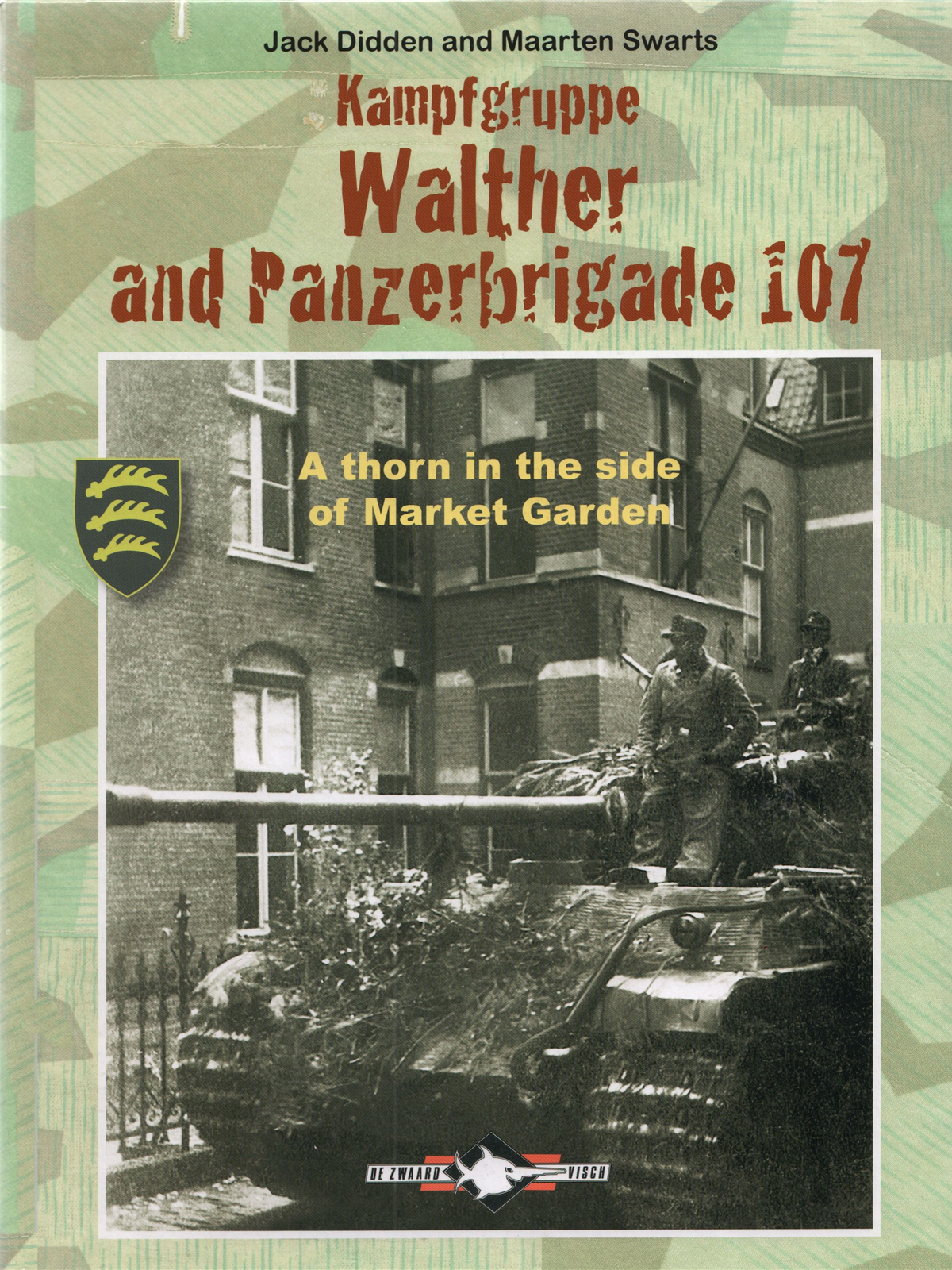
Kampfgruppe Walther, and Panzerbrigade 107
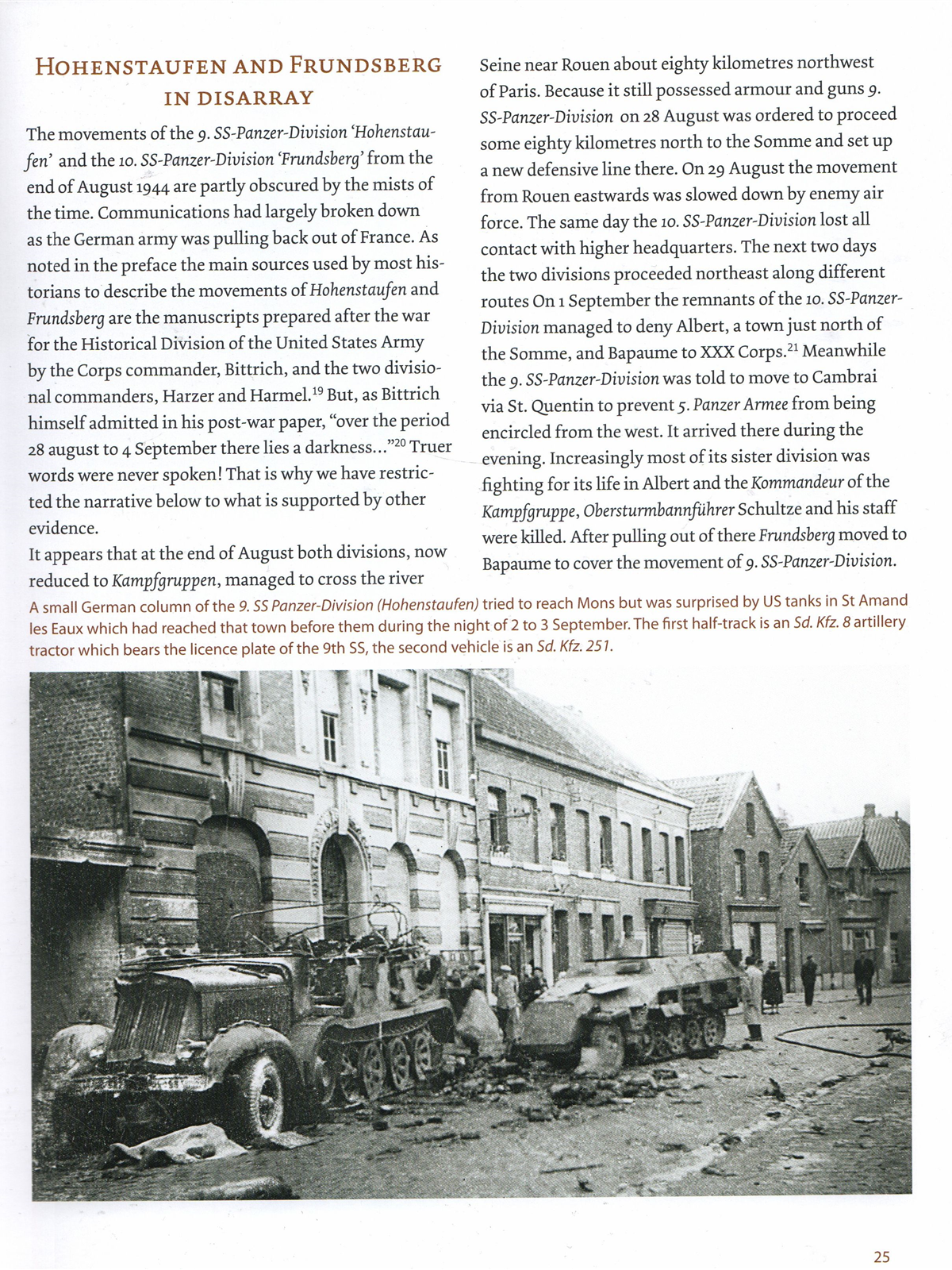
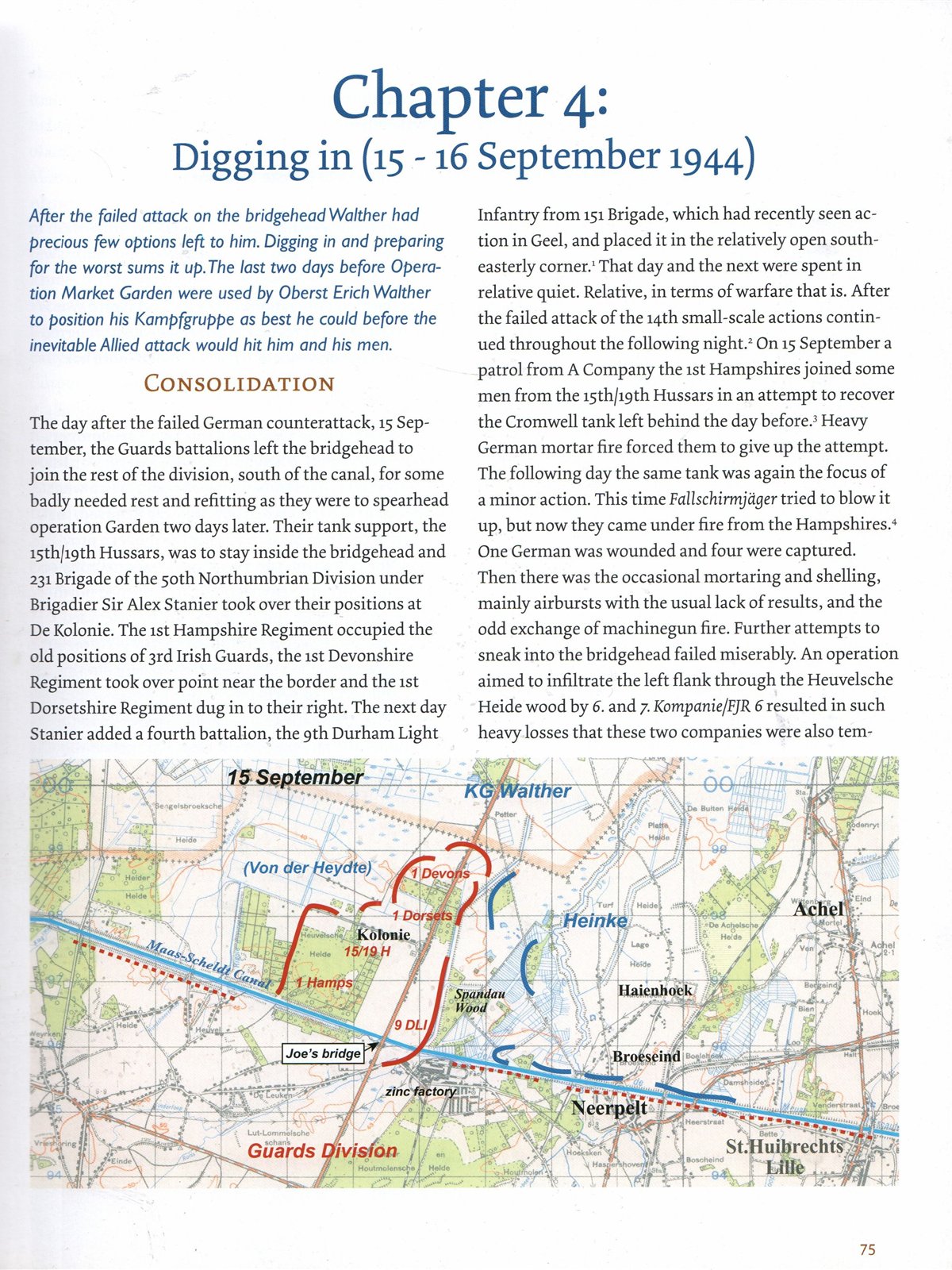
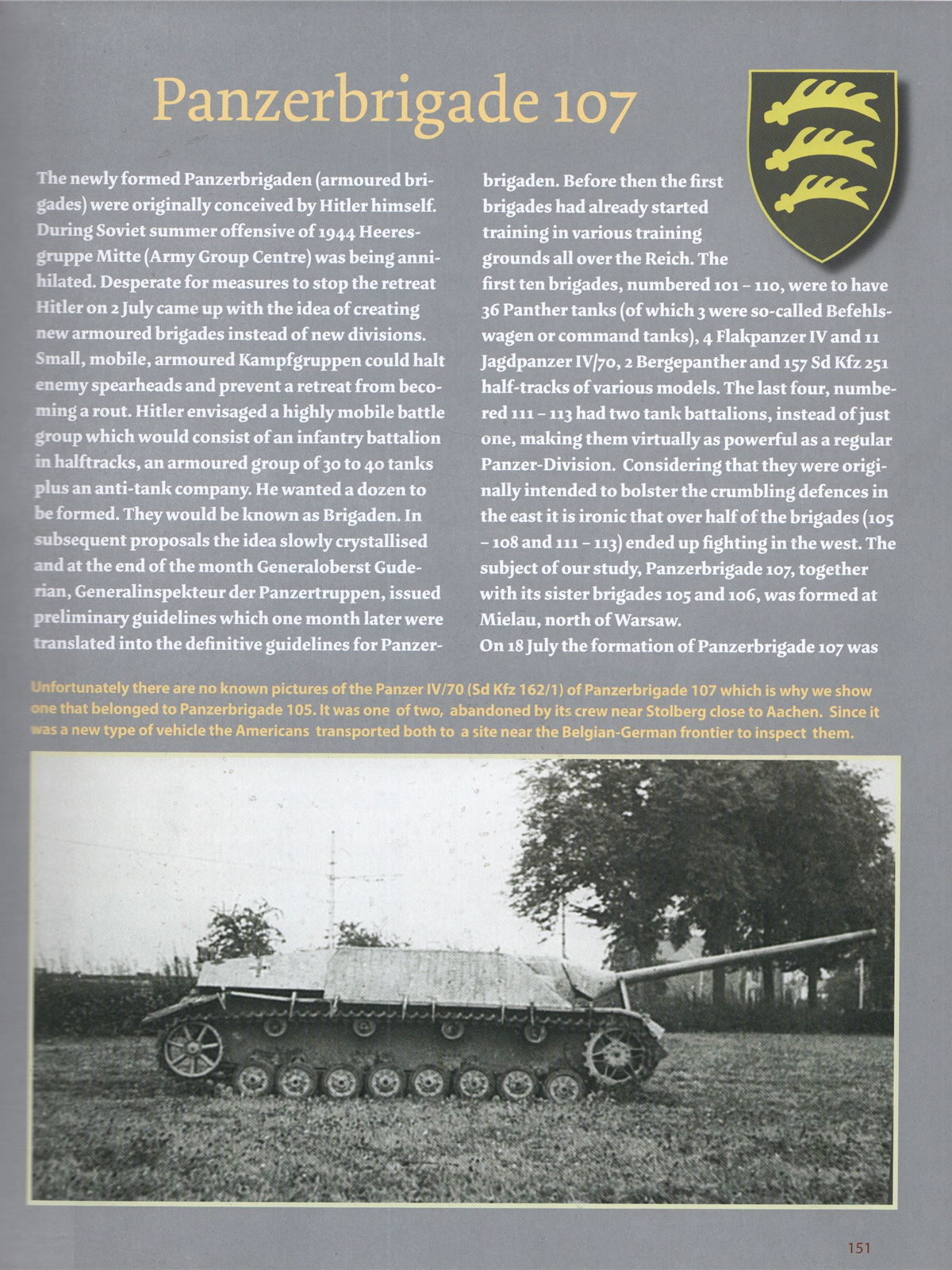
This book, “Kampfgruppe Walther and Panzerbrigade 107, A Thorn in the Side of Market Garden” is a worthy successor to “Autumn Gale” and follows the same formula with plenty of detailed color maps based on the original military maps used then, interesting wartime photos, and very well researched text. The battle group first entered action on 11 September 1944 after the British Guards Division captured the bridge at Neerpelt, which would later be named Joe’s Bridge. In a bid to annihilate the bridgehead and block any further Allied advance, an improvised battle group was formed under Fallschirmjager Colonel Erich Walther. The group was made up of units from all services, including a number of Fallschirmjager battalions, Luftwaffe infantry, regular army units (including cavalry), SS infantry and artillery (from the divisions “Frunsdberg” and “Hohenstaufen”, that were to intervene at Arnhem), army anti-tank units and Panzerbrigade 107.
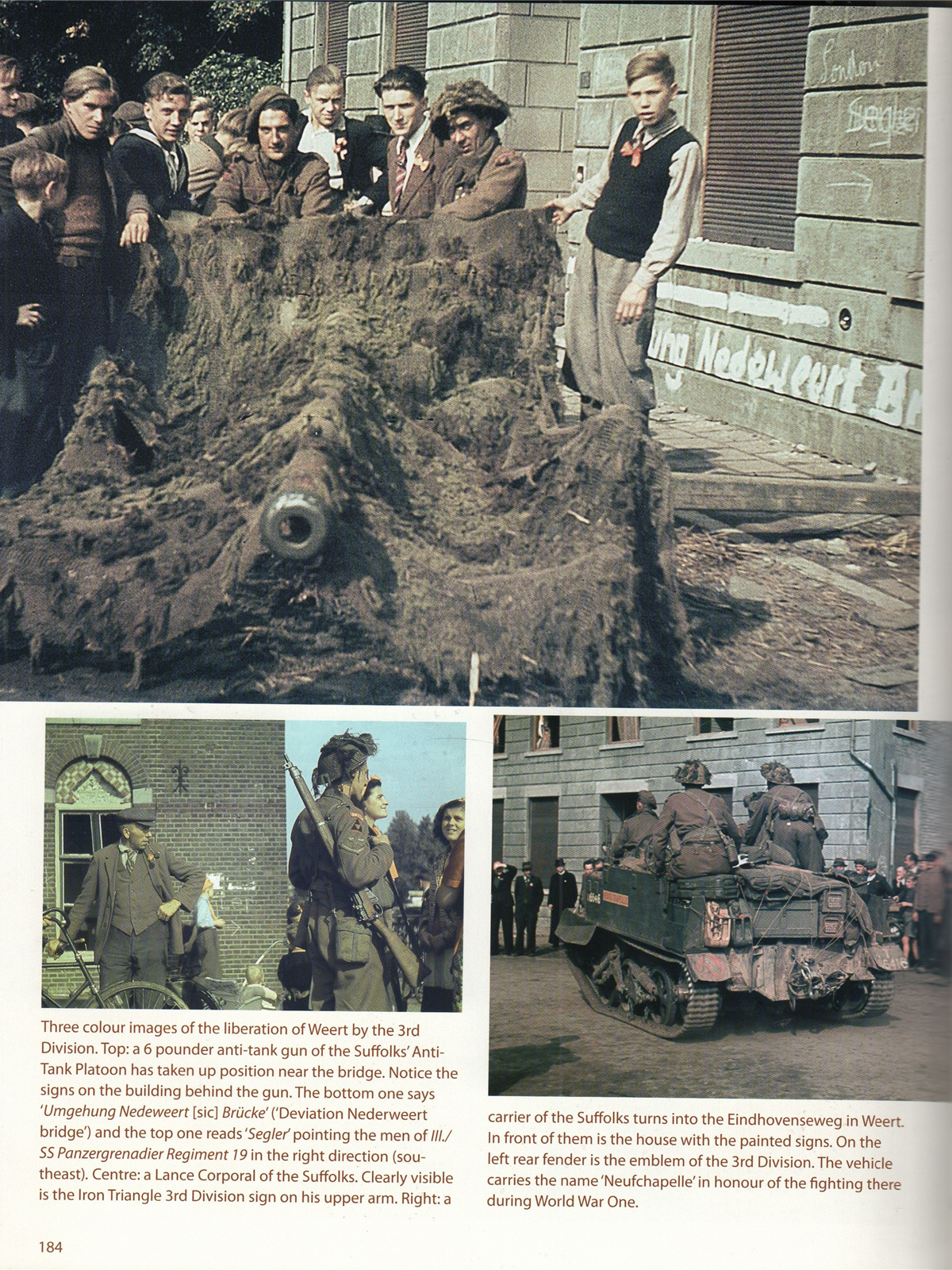
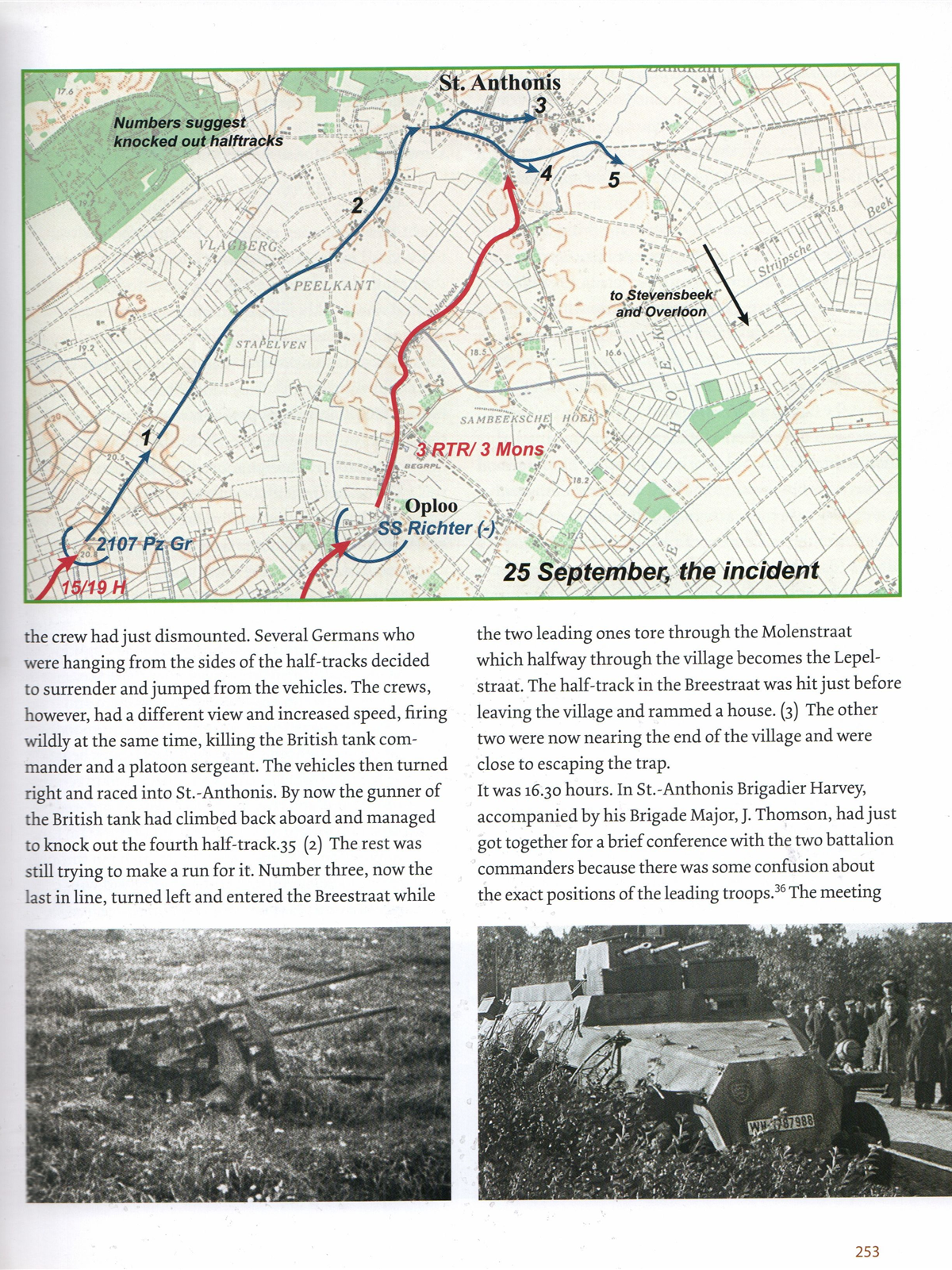
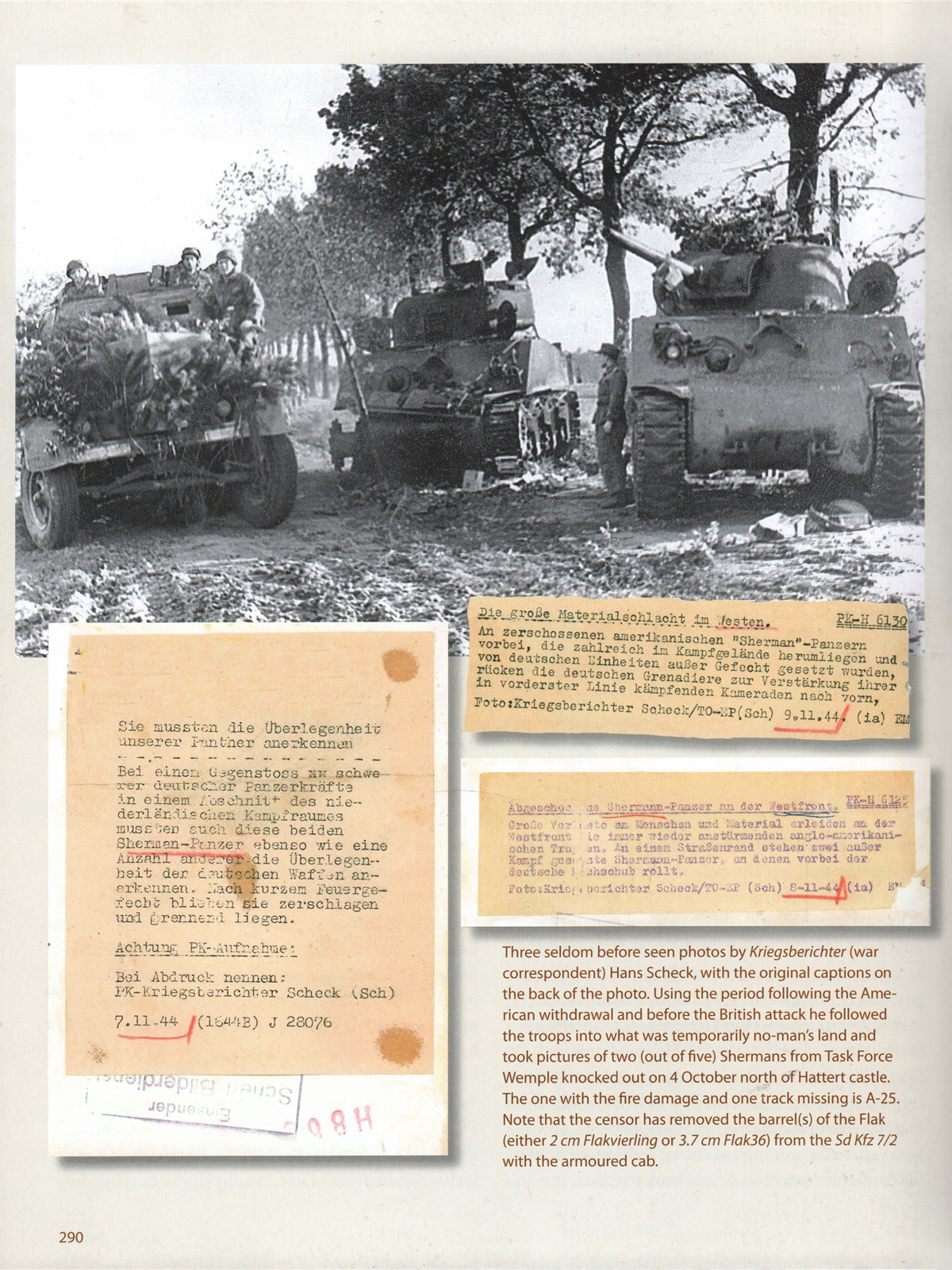
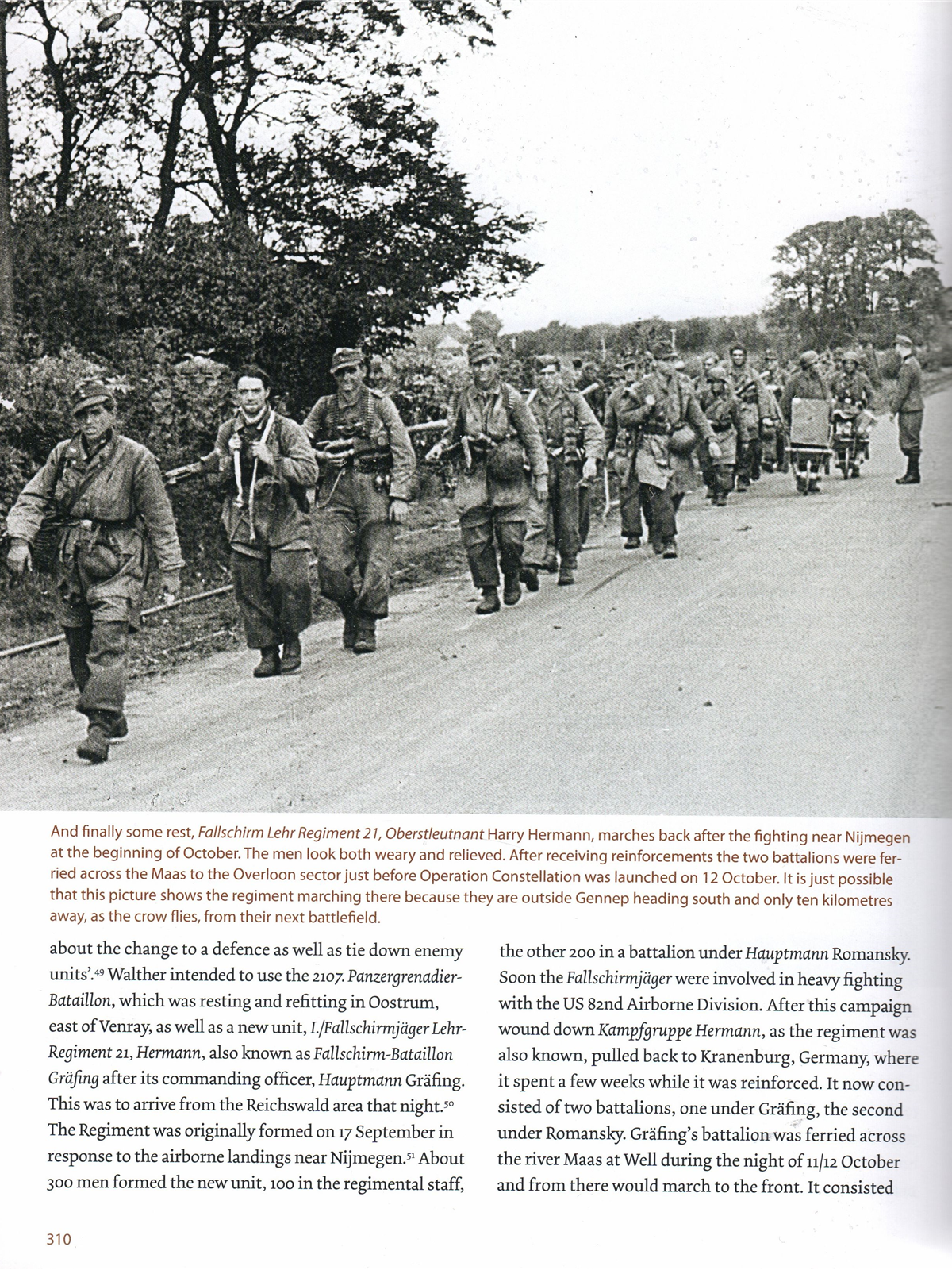
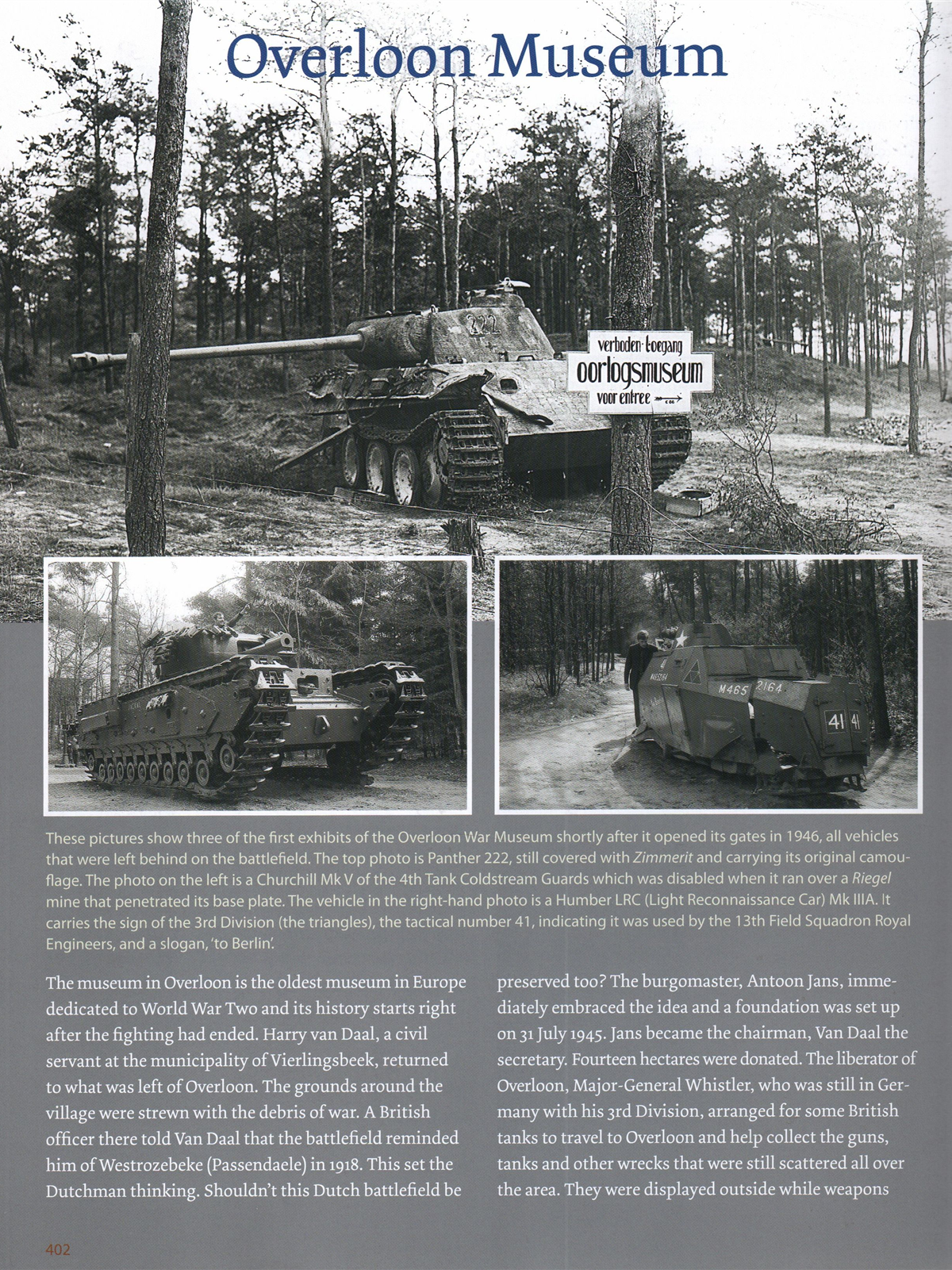
For the first time the authors were able to reconstruct the constantly shifting- composition of the battle group day by day. Kampfgruppe Walther after the failed attempt at Neerpelt became involved in Market Garden and managed to attack the infamous Hell’s Highway and interrupt the traffic to Nijmegen and Arnhem. In the middle of October it fought a fierce battle in the Peel marshes before Walther relinquished command and the eponymous battle group ceased to exist. During its brief period of existence it fought the Guards Division, the US 101st Airborne Division, the British 3rd Division and 11th Armoured Division plus the US 7th Armored Division. All of the engagements will be dealt with from both sides and in minute detail. The story culminates in the Battle for Overloon. Here is where some of the toughest fighting since Normandy took place and Allied and German casualties were horrendously high. The authors have also found that the existing literature about this period of fighting is incomplete or even false. For example in the books “It never snows in September” or “Forgotten Battle” some accounts seriously needed to be revised. During their research the authors managed to have unearthed many new pictures, both taken from the German side (always a problem for this time frame) and the Allied side.
Finally some key questions will be answered, such as, where did the first tank battle take place in the Netherlands in 1944? Why did the Panzerbrigade fail to take the towns Son and Veghel? and Why did the Americans fail to take Overloon? etc. This title should be of interest to both modellers and historians.
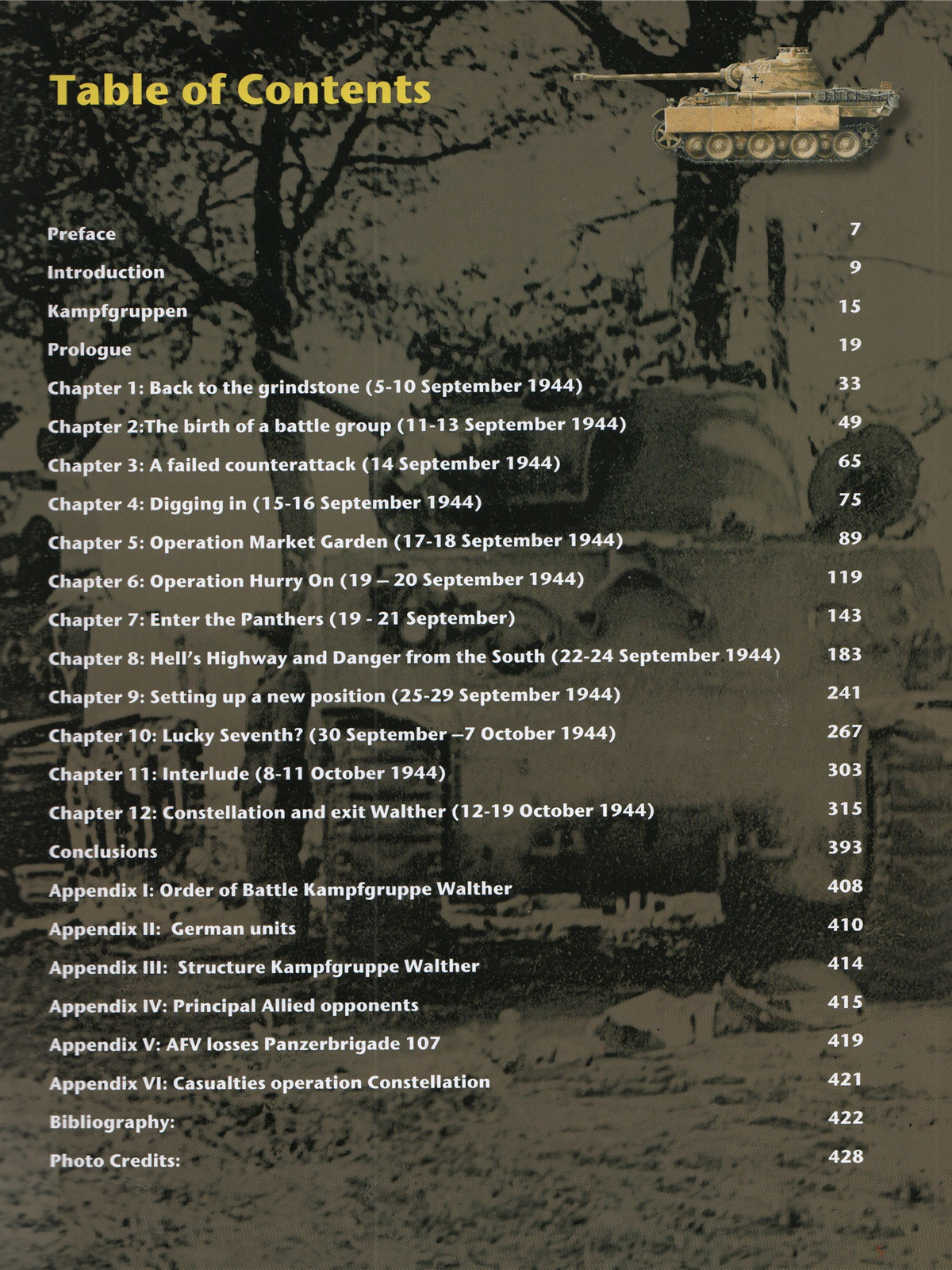
Table of Contents
- Preface Introduction Kampfgruppen
- Chapter 1: Back to the grindstone (5-10 September 1944)
- Chapter 2:The birth of a battle group (11-13 September 1944)
- Chapter 3: A failed counterattack (14 September 1944)
- Chapter 4: Digging in (15-16 September 1944)
- Chapter 5: Operation Market Garden (17-18 September 1944)
- Chapter 6: Operation Hurry On (19 — 20 September 1944)
- Chapter 7: Enter the Panthers (19 21 September)
- Chapter 8: Hell’s Highway and Danger from the South (22-24 September 1944)
- Chapter 9: Setting up a new position (25-29 September 1944)
- Chapter 10: Lucky Seventh? (30 September —7 October 1944)
- Chapter 11: Interlude (8-11 October 1944)
- Chapter 12: Constellation and exit Walther (12-19 October 1 944)
- Appendix I: Order of Battle Kampfgruppe Walther
- Appendix ll: German units
- Appendix lll: Structure Kampfgruppe Walther
- Appendix IV: Principal Allied opponents
- Appendix V: AFV losses Panzerbrigade 107
- Appendix VI: Casualties operation Constellation